Wow, it’s here 2026. I said to someone, at least we don’t have to write many checks and check the date regularly for the next couple of months – remember those days?!
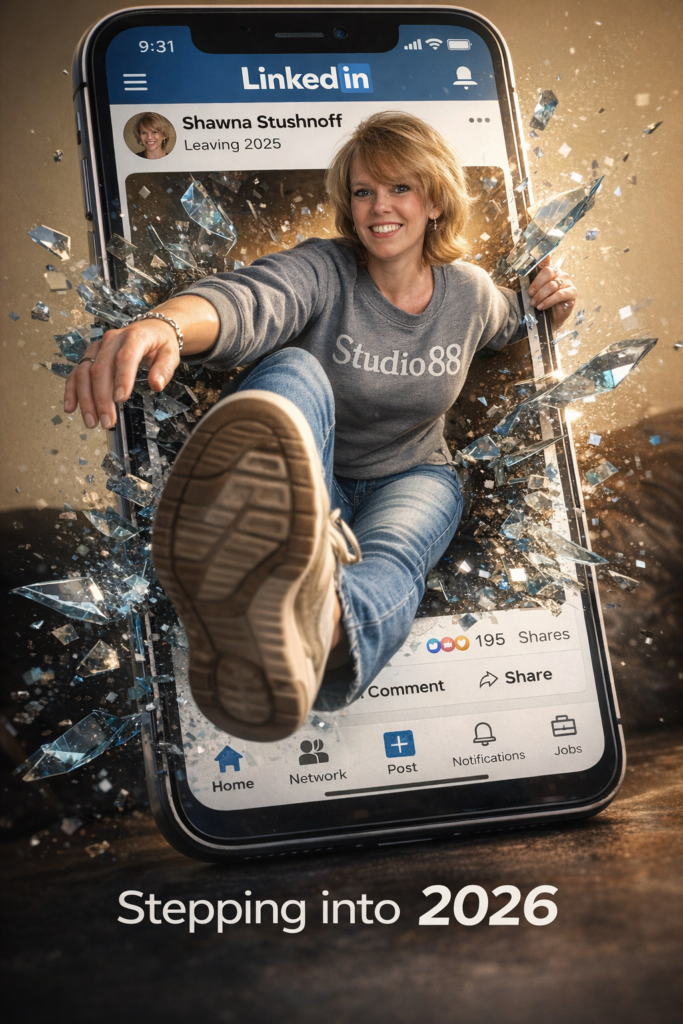
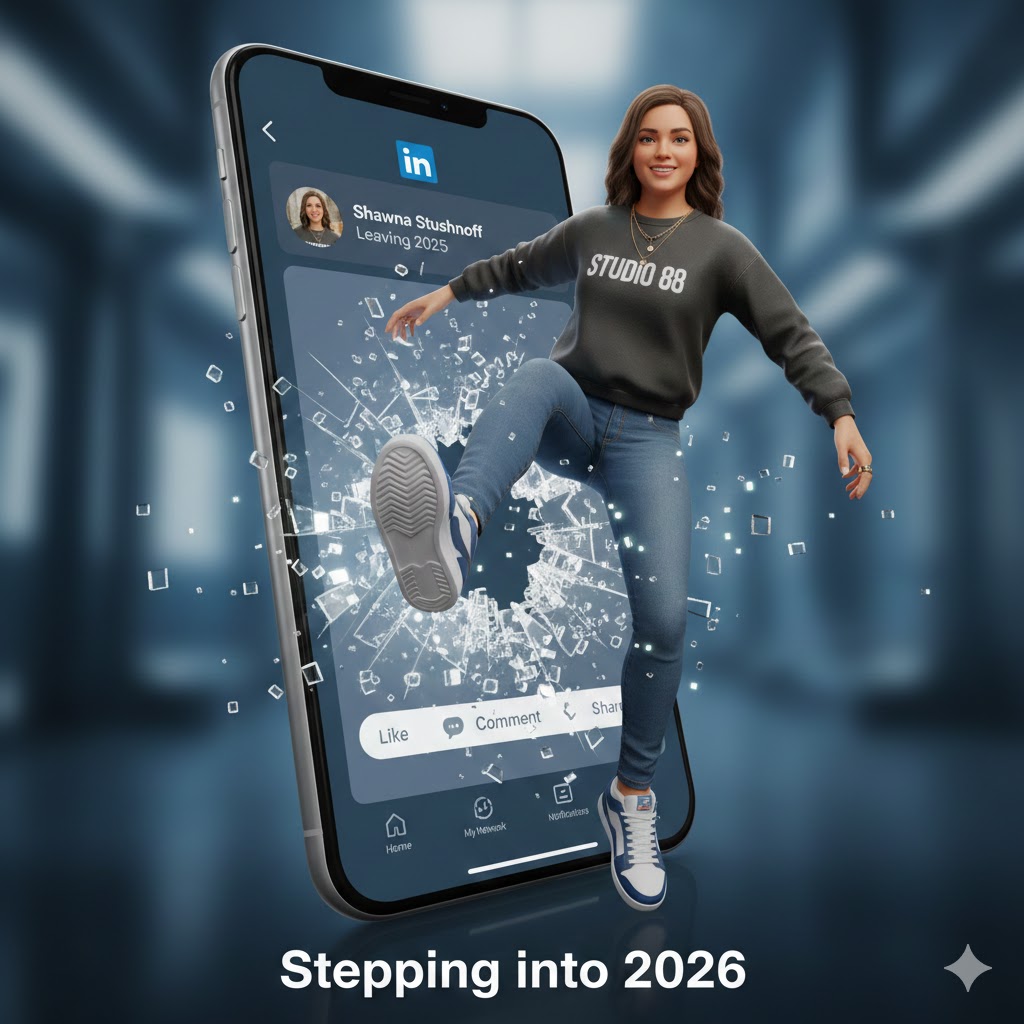
Over the holidays I stumbled into a colleague posting a chat, the results of an AI prompt they saw in Mary Nunaley’s post on LinkedIn. I realize that’s not a great way to cite the creator of the post, however getting it second hand makes it a bit harder to credit the author! Although I didn’t follow her post note for note, (don’t worry, be happy) oh sorry word by word, I did give it a whirl and this is what I got from ChatGPT. It’s a bit scary what a little text and an image upload can create nowadays!
Whew. So for me playing with AI is all about understanding what AI is and where it is going, for without understanding it’s hard to evaluate and make decisions. It sure is a fun toy, but as I said before – also a bit scary.
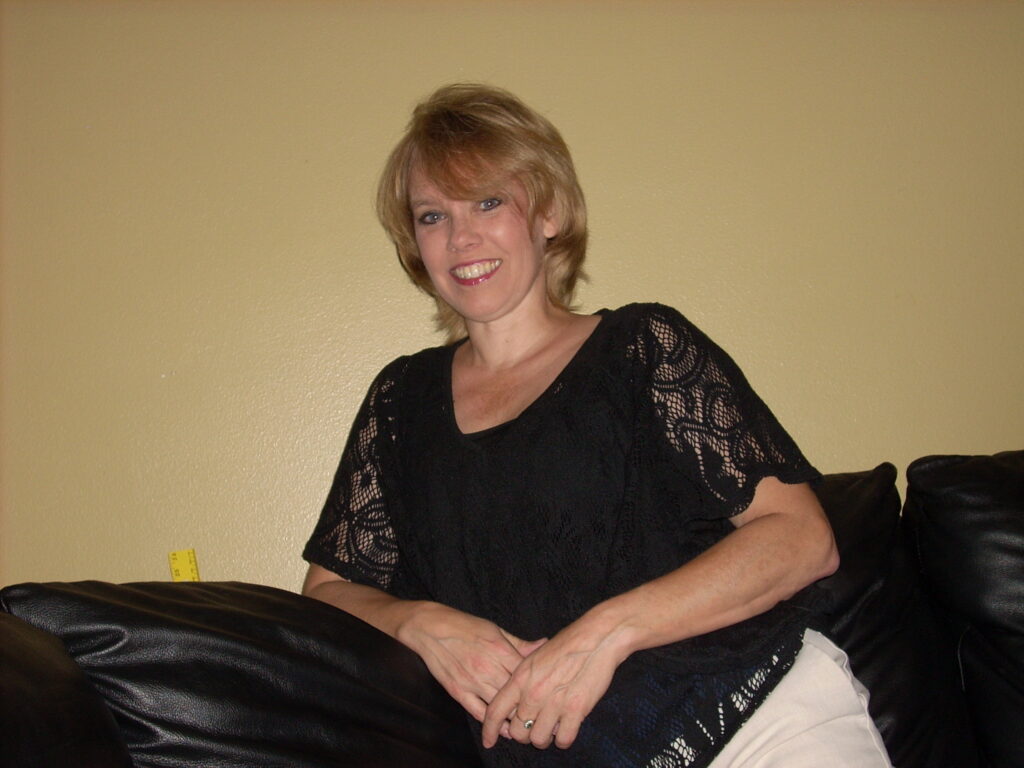
In case you want to give it a try, here is the prompt I used and the photo I uploaded.
PROMPT
Can you help me make an image using this prompt? Use the uploaded photo as the identity reference. Keep my face, hair, skin tone, and outfit accurate. Create a hyper realistic 3D scene where I am breaking out of a LinkedIn mobile timeline right foot first with left foot ready to follow behind. Rebuild the LinkedIn interface from scratch. Include the LinkedIn logo at the top, the profile picture, username is “Shawna Stushnoff Leaving 2025” post frame, reactions row, and the Like Comment Share bar. Include the bottom LinkedIn navigation icons. Place me inside the post image area, then reposition my body so it looks like I am climbing out of the phone and stepping forward out of the timeline. Make one foot extend toward the viewer in full 3D. Add glass shards or pixel fragments around the point where I break through. Lighting should match my original photo. Keep the final image bold and cinematic. I should be wearing blue jeans, a Studio 88 sweatshirt, jewelry, and stylish shoes. At the bottom it should say “Stepping into 2026”
PHOTO
Of course, not all AI image generators are the same, check out what another one gave me. One good lesson there if teaching about the use of AI is rule #1 – you, as the SME, need to fact check. Run your prompt, use your own knowledge to check the work it presented you with, then adjust as needed or change LLMs. As an early assignment in a course, requiring the use of the same prompt in multiple LMM’s, this quick work sample with a requirement to post on a Discussion Board and then consider what went well, not so great, and what adjustments were made, begins to model ethical use of AI. Particularly when the assignment also requires citing of sources, original prompts and edited prompts.
I believe ethical use of AI will be a critical skill going forward, this is a quick and easy way to highlight the importance of some best practices, like fact checking!
2025 saw a surge in interest in AI, let’s see what 2026 brings….
I set off to Spokane to find others working in the Outcomes & Assessment space and program outcome mastery for students in asynchronous online courses. It’s a bit of a niche market so I wasn’t expecting to be overwhelmed with new contacts and information, and my experience met my expectations. I had a few conversations, made some good contacts, and gained some interesting insight. But what I was overwhelmed with was AI, AI, AI… Not only at the Instructure Conference, which in itself had an AI theme as a whole, but also in the COLTT (Colorado Learning and Teaching with Technology) Conference that I stopped at on my way back to my home base in Tennessee. I was speaking on our progress with Outcome & Assessments in the Canvas LMS, but while I was there I partook of the other sessions, AI, AI, AI. Over half of them were AI related, and what I learned was not necessarily surprising, but the depth and breadth of the focus surrounding AI sure was.
The Keynote was a Plenary Panel where the theme that emerged was, without a doubt, that employers are looking to hire folks that know how to use AI ethically and effectively and then use what they find to take it to the next level through critical thinking, collaboration and communication. And, that they were seeing was young professionals lacking not only in AI skills, but the other more traditional critical thinking, collaboration and communication skills as well. As one panel member put it, if AI can do it for me I don’t need you, I need you to go to the next level. Another panelist noted that they thought they had found the perfect candidate, they were asounded at the depth of their knowledge, but this person couldn’t effectively communicate with others in the online environment and so they had to pass them up and hire someone else.
Other comments of note included The human expert who uses AI wisely becomes unstoppable. And We need to be teaching students to Human, as in relying on AI as a tool should be expected, the human part is key. Those who know their field well enough to fact check, pull in a creative component to the task at hand, collaborate with others to get the job done, and communicate their position, they will be the superstars.
Employers are looking for educators to model ethical use of AI by incorporating use of AI in their courses, being transparent about it, critically evaluating and then implementing AI into assignments. Then also require their students to be effective following them down a similar path as they complete assignments. For students introduced and taught to use AI will have a leg up on others. If we’re hiring, that’s what we’re looking for.
The world is changing, quickly, and the expecation emerging seems to be use the tool, hyper launch yourself into the taks using AI, evaluate what it returns, then add the human component that only we can do. Now, if you think it’s not daunting to keep up and teach students ethical use of AI, whew you’re lucky. But if we want to stay on top of our game, this seems to be the future because AI, it’s here to stay.
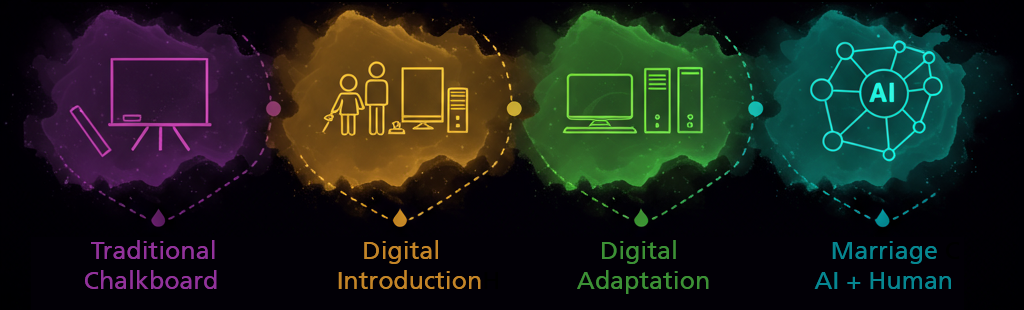
Gemini. (August 2, 2025). A timeline of the transition from the traditional classroom to AI as a partner in learning. Google.
Recently I enrolled in a self-paced course entitled Designing For the Future: Instructional Design in the Metaverse. The course is centered around a journey through the metaverse as you craft immersive e-learning experiences. I’ve always been passionate about engagement with content to foster deep learning and I was very excited to have the opportunity to begin the course. For me, the self-paced option is the only option as my world ebbs and flows in what I would consider inconsistent patterns, between work and things happening in my personal life there is always something going on!
We had a break between Course Design Institute sessions at New Mexico State University, NMSU, and I took the opportunity to dive into Modules 1 and 2 of this course. The certification badge requirement for Module 1 was to create a pitch deck to introduce VR/AR, and the metaverse, how one would evaluate fit using the DICE acronym, as well as touching on ROI. Take a peek inside Module 1 of the course via my pitch deck. Spoiler, it’s about 10 minutes long so get your cup of coffee!
Teaching online is the same, but also very different from in person instruction. Here’s a quick 5-7 minute read of some key concepts related to the creation of online learning courses. This job aid is an Adobe pdf which makes it easy to print or save and reference as you need it!
I can take it when those around me say, don’t you have enough to do without adding to your plate? Because I love it! It’s more like fun than anything being able to dive into something new, and since learning and learning tech is my passion, it’s more like down time than anything else. It’s really play time and of course since we’ve loved play time since we were kids, what’s not to love now?!
However, when I’m busy playing and learning I’m very bad at blogging, so let me catch you up!.
The summer of 2022 I dove into an online hybrid course to earn my CPTM certification which was a great fit for my background which is heavily vested in both business and learning. I very much enjoyed the course and was able to practice seeing learning through a new lens as we focused on the ROI of learning and how to get to the bottom line of the organizations objectives that drive the need for training and how to showcase the importance in a world that believes that training is a great place to target cutbacks if/when that time comes. In the end that type of cut really hits the bottom line harder than most people realize.
Thirsting for more and going in another direction I returned to engagement and retention and my belief that play pulls us into a world where a focus on these two things really drives effective transfer to long-term memory. After all that’s how we start learning, by playing. No wonder stories and play pull us back to them and we truly find power in play.
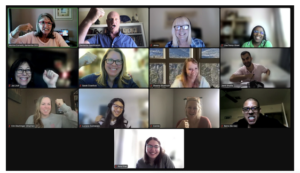
Our Surveyor Group
I joined a Sententia Games level one Surveyor certification course last fall and had a blast looking at game mechanics, why we are drawn to games and how to use them in a learning environment. Earning my badge was awesome, but I must admit seeing my team’s mock up of the game we collaborated to design showcased as a sample on their website… well that was even better.
I took the winter off but as January passed the level two certification was calling my name. So, despite a whirlwind of things going on around me I enrolled in the level two Journeyman certification. The awesome part about this level of the certification is that we are designing our own game/course out and working in guilds as we support the others in our guild through peer reviews, critical thinking, and discussion. So I guess you’d say I get to put my money where my mouth is as this is one of the things I communicate to the professors I assist with game design at New Mexico State University. Students learn best by doing and interacting with peers as they chart the course of a hero’s journey while traveling through growth, understanding, doing, and come out changed on the other side.
My quest this time is to design a gamified quest for the Subject Matter Expert (SME) who is working with an Instructional Designer (ID) as they chart their course to put a course they teach online in an interactive, memorable way. Although the journey of this gamified SME/ID course design has just begun for me I can’t wait to see where I land on the other side.
I have just finished week one of this six week course and thus far chosen my project and pondered some onboarding thoughts and a theme. I’m thinking Mission Impossible is the way to go as my experience has led me to believe most SMEs dread this process they know nothing about, they like their comfortable in class environment, and they are completely overwhelmed as they begin down this path and have people they don’t know trying to guide them to understand that effective online learning is much different that just putting their closed captioned lecture videos online!
Well not quite, but when I think back to an assignment that was part of my master’s degree a few years back where we were asked to produce a media sample of something that would hit 300 views on YouTube I thought that was going to be like climbing a mountain. Gunnar hits the slopes did its job and we got the views however today Zelda & Piano hit over 100,000 views on Spotify in just less than two weeks since it’s release!
When I needed something to fill some down time a couple og years ago my son suggested we write some music and he would produce it and put it out there for the world to hear I really didn’t think he was serious. Even though he’s an accomplished producer, I had never written music, let along played it for anyone else. After all, although I can play and I have taught both music theory and students to play as well… I don’t play in public. I get so nervous my hands shake and it never goes well. Try as I might to get past playing more than chords when other folks are around, it just remains a struggle. So play in public…. ?
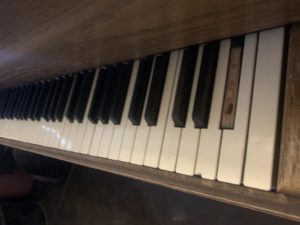
Thankfully writing and recording isn’t like playing in public. You have your headset, the click in your ear (for those of us who have been around a while that’s the modern metronome) and you can just relax and play. So, in my garage on a wonderful old 1930’s Baldwin, shown above, we tuned and recorded A Flicker, our first original.
Shortly afterwards discussions with GameChops led to our writing some Zelda arrangements on the piano. Kyle and I wrote and recorded them last fall, he did his producing magic and we turned the over to GameChops to release. The reveal was a couple of weeks ago. I watched in amazement as people seemed to really enjoy what we had created, I watched in shock as the stream count continued to grow on Spotify and of course that doesn’t include the plays on YouTube or through other avenues.
As GameChops put it in the description, below, on his YouTube channel for the reveal …this family project stems from many years ago when the boys and I played the original NES version of the game for some family fun time.
“Zelda & Piano” – a piano tribute to The Legend of Zelda, arranged and performed by Stushnoff. “Zelda & Piano” is a delicate tribute to The Legend of Zelda that’s perfect for relaxing, sleeping, or focusing to. This is the debut album from our new label, Unplugged, which focuses on classical, acoustic, and jazz music. Zelda & Piano pairs top-tier musicianship with classic themes from the beloved Legend of Zelda franchise from Nintendo. Zelda & Piano is our first solo piano album, arranged and produced by Stushnoff. Stushnoff is a collaboration between Nashville-based producer Kyle Horvath, and his mother Shawna Stushnoff, a Royal Conservatory-trained pianist. Zelda & Piano is the duo’s first album, inspired by the many hours the two spent playing the original NES title together, exploring and solving puzzles with hand-drawn maps of Hyrule. This heartfelt collaboration features tracks from across the series, from its 1986 debut to the Nintendo 64’s Ocarina of Time, through Twilight Princess for the GameCube and Wii consoles.
Search for Stushnoff on Spotify to check out A Flicker and our Zelda arrangements. We’d love to hear what you think.
As we have all seen, the dawn of COVID changed the way we learn, study, and work over the past year. Facing a yet uncertain working environment, in the near future at least, the Surplus Property area of the Distribution Center at CU Boulder decided to pursue an online training environment for staff who need access to the surplus property software used across campus as they dispose of university property. A decision was made in May, 2021 to pursue a self-paced online course that will also become one section of the three part series that staff can pursue to obtain Property Manager Certification.
Disposing of certain types of Surplus Property requires submission and approval of a disposal form!
We settled on the use of Canvas to house the training as this is the LMS used by students and staff on campus, it is accessible to all staff both via computer and mobile device, and use of Canvas provided the added benefit of introducing staff to the LMS they will see if they choose to use their tuition benefit.
Flexibility to complete training either via a few short, focused sessions or through completion of short learning modules will be accomplished by chunking information into smaller targeted bites of information broken into modules that average about ten minutes each. The ability to access Canvas on a mobile device contributes to the accessibility and flexibility piece as well.
Engagement is a more difficult question as most of our adult learners are used to a classroom setting, which for technical training is not always the most effective path. In addition, some departments on campus have surplus property to dispose of fairly regularly, whereas other departments may see one transfer every year or two. Expecting retention of the information over an extended period of time would be somewhat unreasonable. Adopting a format where by information is chunked into targeted topics facilitates self-paced learning within Canvas and also provides a tracking mechanism to ensure users understand the policy and use of software before we issue a logon, or a certification of completion of our portion of the property manager certification. The format used, of narrated screen cast recordings created in Camtasia, gives us the ability to also place learning bites on our website for access any time they are needed. Another added benefit lies in the fact that the learner also retains the ability to return to smaller portions of the training in Canvas even if there is a long period of time between use the software.
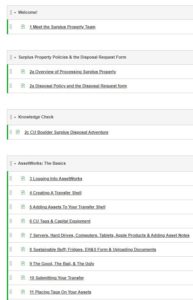
After discussing a flow that would offer flexibility for completion as well as an option for our seasoned users to skip the basic training we settled on the following:
a module that includes a welcome and introduction to the training format
a policy review module that all staff would be required to complete
a knowledge test for experienced users to allow them to skip the next sections
a heavier module that includes software training and a look at the policy, previously covered, in action
an optional module we call a Deep Dive into processing surplus property
and a module that would point users to a place to sign up for a Q&A session if they wished to complete our portion of the three-part Property Manger Certification
Canvas Course – Set Up Overview
All users will be required to complete the first two modules and the Surplus Property Disposal Adventure to either obtain certification of completion for the Property Manager Certification. The adventure is a short review where users move from campus building to campus building on a game board as they answer surplus property disposal questions. Experienced users will have the option to move to the challenge after the introduction and policy sections. If they successfully complete the adventure they skip the software learning modules and are able to sign up for a Q&A session. New users see the adventure again after completing the software training.
To increase engagement a few interactive elements will be added to the course in addition to the Surplus Property Disposal Adventure. The welcome/introductory section will open with an interactive Meet The Team element wherein learners can hover over a black and white photo of each team member, as they do the photo turns to color and a short bio appears in the middle of the page. Other modules will include a discussion board providing the opportunity to see questions or concerns of those who have completed the course before them as well as a response from the Surplus Property Staff.
The filming of video, narrated screen recordings of navigating the software, and construction of Canvas course began in May 2021. The course is currently being reviewed by the Surplus Property Team in preparation for final edits and an initial revision before beta testing, feedback and iteration. Although most elements are in place the Surplus Property Disposal Adventure is still under construction.
Time hiking in the mountains looking for geocaches, a favorite hobby of mine, gave me plenty of time to think about pros and cons, time to ponder the what if’s, time to run scenarios through my mind. If only there was a crystal ball, or some type of way to really be an influencer, maybe this would be an easier question.
Let’s face it Education was politicized long ago and where we have landed at this point in time is not optimal, nor has it been for quite some time. I can’t help think that politicizing pedagogy, any type of pedagogy – digital or otherwise- would eventually land us in this same undesirable place. Yes, the intent behind standardizing education was good and it worked for a time, but politics were in a good place at one point as well. Change is necessary at times and when the rest of the world is changing around us and we, as a society, choose not to see it, evaluate it, and embrace it when needed, the end result is not optimal. I feel like this is where we have come in education, we have come to not optimal. We are so focused on the system in place and the standards we are missing the bigger picture. The students.
Is it not politics that already lies behind decisions made and standards set? My understanding is that the directions schools feel they are driven is often based on funding and the grades/rating schools receive for meeting standards and performance. Over a period of years our educational system has tried to institute change to drive our students to perform to their best ability. Teachers were pushed to meet standards for the majority but what works for some doesn’t work for all. Did we really end up doing what was best for all of the students? Were decisions really made with the student’s best interest in mind? Or were there ulterior motives? Or was it maybe a bit of both? However, where we have landed has turned students into numbers, a room of clay vessels, of the same age, to be filled up with knowledge, at the same time, and in the same way. The knowledge, of course, is what society wants them to know, the knowledge that adults and leaders feel is important. Sadly, without focus on engaging them in the learning process, without finding what makes them tick, without helping them find and use their strengths and passions in their learning. We are remiss if we do not recognize that it is being vested in one’s own learning that teaches us to think, drives us towards what moves us, it is what we remember, it is what fills our souls.
Once upon a time, at least the universities were about growth, learning, thriving, reasoning, and becoming a better person. Now, they are a high-tech trade school where the mentality is I have this knowledge that I think you need and I’ll pass it on to you in my way. Now go learn it and show me you did in the way I can most effectively grade you. It sounds harsh, I know, but on top of it all these students are paying a great deal of money for an education many of them questioning the value of. The bigger question is whether this callous way of treating our students, as numbers or vessels with the expectation to conform and perform, contributed to the follow the leader, frustrated, and it could be argued, the more violent world we live in?
Have we lost track of the fact that giving teachers the freedom to pursue their own passion, teaching, is most productive when they have the freedom to reach students in various ways? Have “we the people” forgotten that students are, thankfully, all different, unique, and learn different things at different rates? What would happen if we turned-education on its heads and gave teachers the freedom to get to know their students and guide them through learning. Would that look like a system where teacher’s followed students over the course of a number of years like the one room school house? Would the expectation that students should strive to learn a certain amount over a number of years give teachers the time to create the mentor relationships that could help them work together to tap into student strengths as well as help them push ahead in their strengths and pull forward in weaker areas with a teacher guide who actually had time and the ability to learn to understand what drives them. Yes, among other things, we would likely need to take a deep look at professional development to swing this direction, especially if a shift in a shorter period of time were the goal.
Ah yes, and that is only one option. But who really can decide what the learning plan looks like, the politician who sits as I do and ponders? Or those in the classroom with the ability to grow to understand their students. Teachers armed with tools, options, and know how, who can pull students into their learning and engage them through student centered learning, choice, and tapping into strengths?
There would be much work to be done, including removing the pressure to perform to standards. We would need to shift to a mindset where that First Attempt In Learning wasn’t frowned upon when things don’t go as planned, a new freedom for both teacher and student. Giving teachers the time, place, and ability to use, or rebirth, their passion for teaching lies at the heart of it all. There may need to be professional development, encouragement and incentives, however it is when we are freely working where our passion lies, that we find the strength, power and freedom to do our best. At our best we will be able to develop those critical relationships with students to guide them into ownership of their learning. I think that with a shift to a think, consider & grow, mentality we can find our way back to a great nation where people pushed themselves to new things and new heights. Rather than mindlessly following what is expected, looking to be told what to, and how to do it, or blindly following what is placed in front of them. To find our way there, the power of change needs to be in the hands of the teachers. After all, they’re the ones in the classrooms. How is it we have come to think that someone else knows better than they how to reach their students?
It’s a big shift, but I can’t help but think that politicizing pedagogy, digital or otherwise, would result in once again landing where decisions are influenced by the highest bidder, and that my friends, would be disaster. This needs to lie in the hands of the teachers, they need to take and be given the power to move us all down this new road.
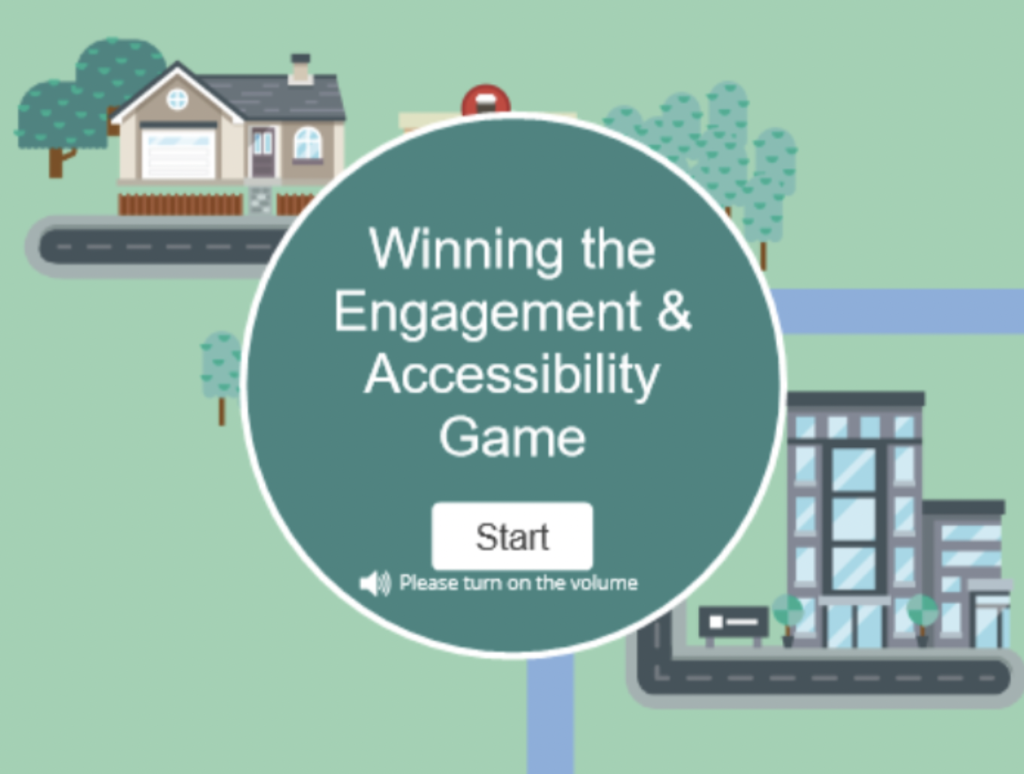
This four short four question quiz was created to help attendees prepare for the webinar through a quick look at one of the games we we previewed during the webinar while highlighting some of the things we felt most important when it comes to digital accessibility!
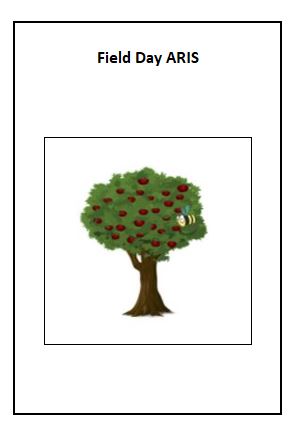
This learning experience was created on the ARIS Field day platform during my graduate studies. I chose this project to document work done by my father when I was a child and document part of his legacy. During the fall of 2025 I learned the platform was deactivated in 2024. I am currently looking of a new platform to rebuild this in honor of my father.
YOU CHALLENGE #2
A challenge designed especially for YOU
From the syllabus, these are “small challenges I design specifically for you. Once we get to know each other a bit, I will design a small project specifically for you – something to take you out of your comfort zone.”
The Quest:
This is your last creative project for this course. It is your project – your story to tell. You pick the topic, the platform, the genre, and the tone. It can be a family story, a project for work, a fun story – all your choice.
Your story must use multiple forms of media. The primary media of your story must be on a platform that you haven’t used already for this course, e.g. if you’ve done a Timeline already, don’t do one here. Do something new.
I chose branching scenario’s as my quest a couple of weeks ago and decided to continue down that road, this time using a different tool, the ARIS app. By using ARIS I could add a GPS element to the learning environment to tell the story of the creation of the Honeycrisp apple. The target would be middle to high schools students with a focus on introducing plant breeding at an elementary level.
The vision I had was to make it a treasure hunt wherein the learner is facing a shortage of their favorite apple, the stores won’t be carrying them soon and they are in a panic. They find their way to the city where one of the scientists that created the apple currently lives and after making an agreement to track down and understand the history of the apple in exchange for a small supply of apples and an apple tree, the learner sets out on a quest. The challenge is to track down where the apple was crossed, learn about the plant breeding process, then return to the scientist to prove to them that they have learned the basics of plant breeding and the history of the apple.
Upon their return to visit with the scientist they prove they have the gained the knowledge needed by presenting the inventory they were given by completing the plant breeding learning quests plant breeding as they discover the history of the Honeycrisp. Then by answering some questions to get their tree and the promised basket of apples.
My plan went from finishing the last project early to just glad to have arrived and survived the quest to come full circle as I near the last submission for class. With my final project written, tech learned, story created and tested, I see myself nearing the nth hour as I submit my final project.
So here it is, the story of the Honeycrisp apple from the perspective of the scientist that bit into the first apple out on a research farm in Excelsior, Minnesota at least a couple of decades ago.
There are a couple of ways to get to the game, although, unless things have changed recently, you still need an iOS/Apple device to play ARIS games.
 Thirsting for more and going in another direction I returned to engagement and retention and my belief that play pulls us into a world where a focus on these two things really drives effective transfer to long-term memory. After all that’s how we start learning, by playing. No wonder stories and play pull us back to them and we truly find power in play.
 I joined a
 I took the winter off but as January passed the level two certification was calling my name. So, despite a whirlwind of things going on around me I enrolled in the level two Journeyman certification. The awesome part about this level of the certification is that we are designing our own game/course out and working in guilds as we support the others in our guild through peer reviews, critical thinking, and discussion. So I guess you’d say I get to put my money where my mouth is as this is one of the things I communicate to the professors I assist with game design at New Mexico State University. Students learn best by doing and interacting with peers as they chart the course of a hero’s journey while traveling through growth, understanding, doing, and come out changed on the other side.
  Well not quite, but when I think back to an assignment that was part of my master’s degree a few years back where we were asked to produce a media sample of something that would hit 300 views on YouTube I thought that was going to be like climbing a mountain. Gunnar hits the slopes did its job and we got the views however today Zelda & Piano hit over 100,000 views on Spotify in just less than two weeks since it’s release!
 When I needed something to fill some down time a couple og years ago my son suggested we write some music and he would produce it and put it out there for the world to hear I really didn’t think he was serious. Even though he’s an accomplished producer, I had never written music, let along played it for anyone else. After all, although I can play and I have taught both music theory and students to play as well… I don’t play in public. I get so nervous my hands shake and it never goes well. Try as I might to get past playing more than chords when other folks are around, it just remains a struggle. So play in public…. ?
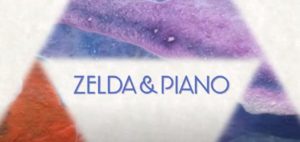 that’s perfect for relaxing, sleeping, or focusing to. This is the debut album from our new label, Unplugged, which focuses on classical, acoustic, and jazz music. Zelda & Piano pairs top-tier musicianship with classic themes from the beloved Legend of Zelda franchise from Nintendo. Zelda & Piano is our first solo piano album, arranged and produced by Stushnoff. Stushnoff is a collaboration between Nashville-based producer Kyle Horvath, and his mother Shawna Stushnoff, a Royal Conservatory-trained pianist. Zelda & Piano is the duo’s first album, inspired by the many hours the two spent playing the original NES title together, exploring and solving puzzles with hand-drawn maps of Hyrule. This heartfelt collaboration features tracks from across the series, from its 1986 debut to the Nintendo 64’s Ocarina of Time, through Twilight Princess for the GameCube and Wii consoles.